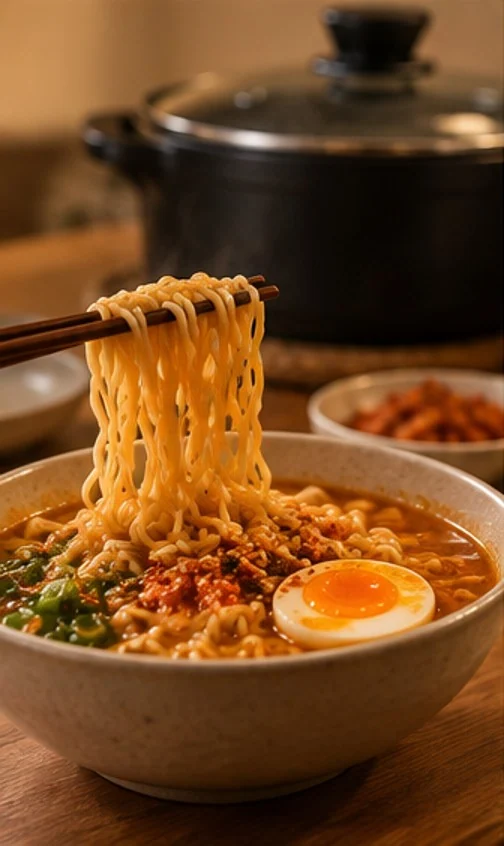
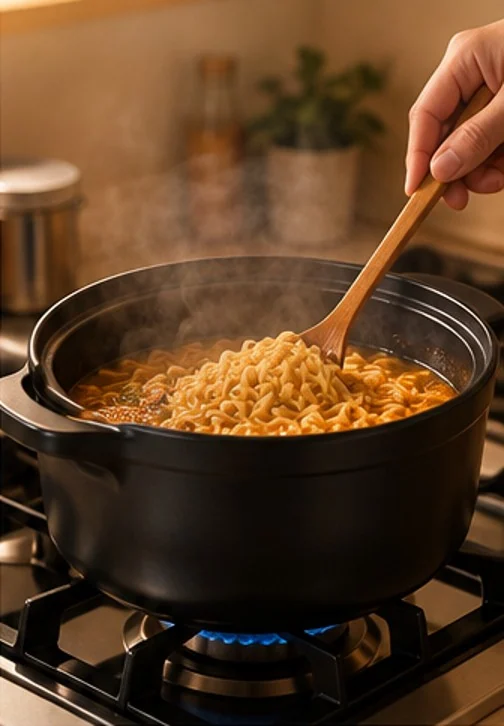
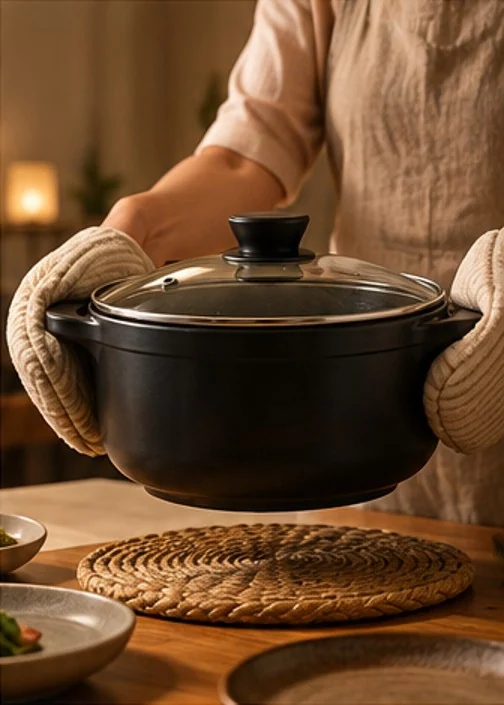
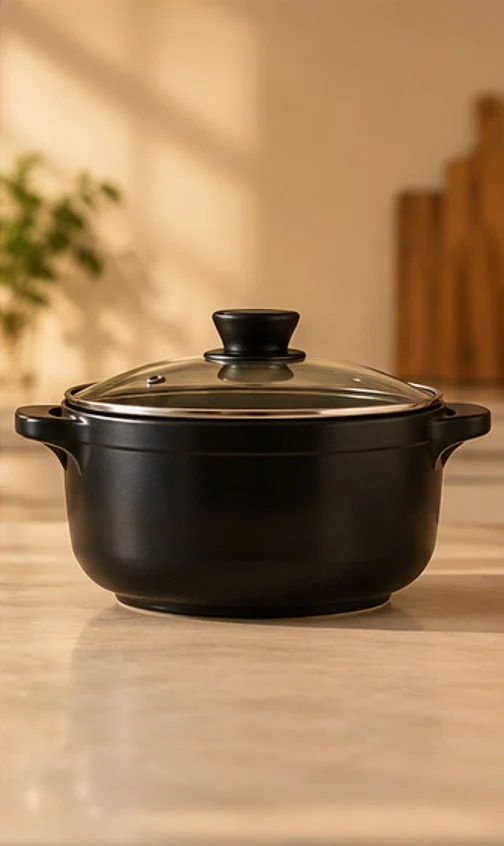
Concept: Cooking demonstration — from craving to cooking.
Objective: Connect an appetite-led opening to a real cooking demonstration and clear product proof.
Customer question: Can I picture using this pot to cook and serve a comforting meal at home? (A question the creative explores, not a finding that customers want Korean-drama-related cookware.)
Hypothesis: A craving-led opening may earn stronger initial attention; a food-first noodle close-up may attract more qualified interest. The variants compare hooks only. The Korean-drama cue is a creative hypothesis, not an established customer motivation.
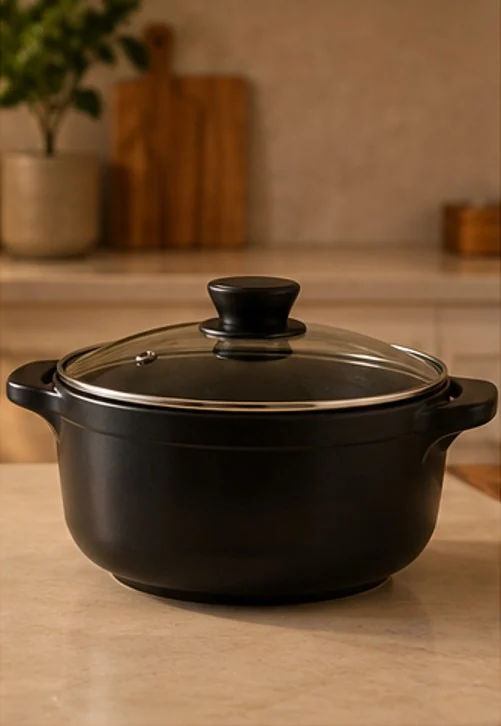
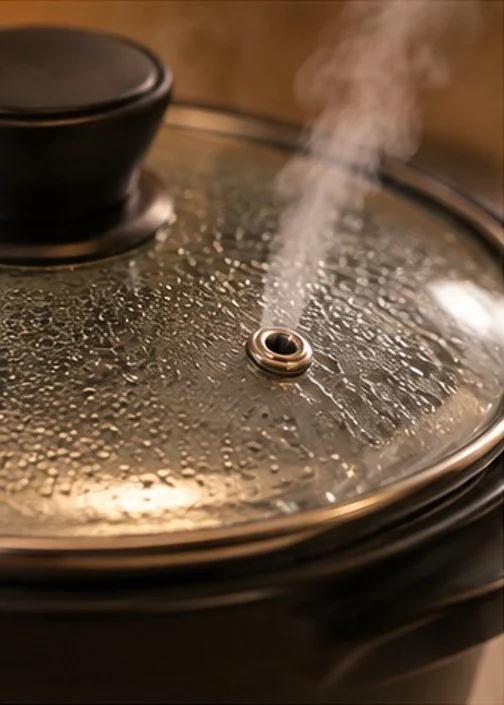
Product: 2000ml black ceramic pot with glass lid, stainless-steel rim, steam vent and cut-out side handles. Do not infer current price or discount from the “Bestsellers on Discount” collection label.
Destination: nestasia.in — Classic Black Korean Ceramic Cooking Pot, 2000ml
 AI reference
01A
Version A: craving-led hook
0–3s
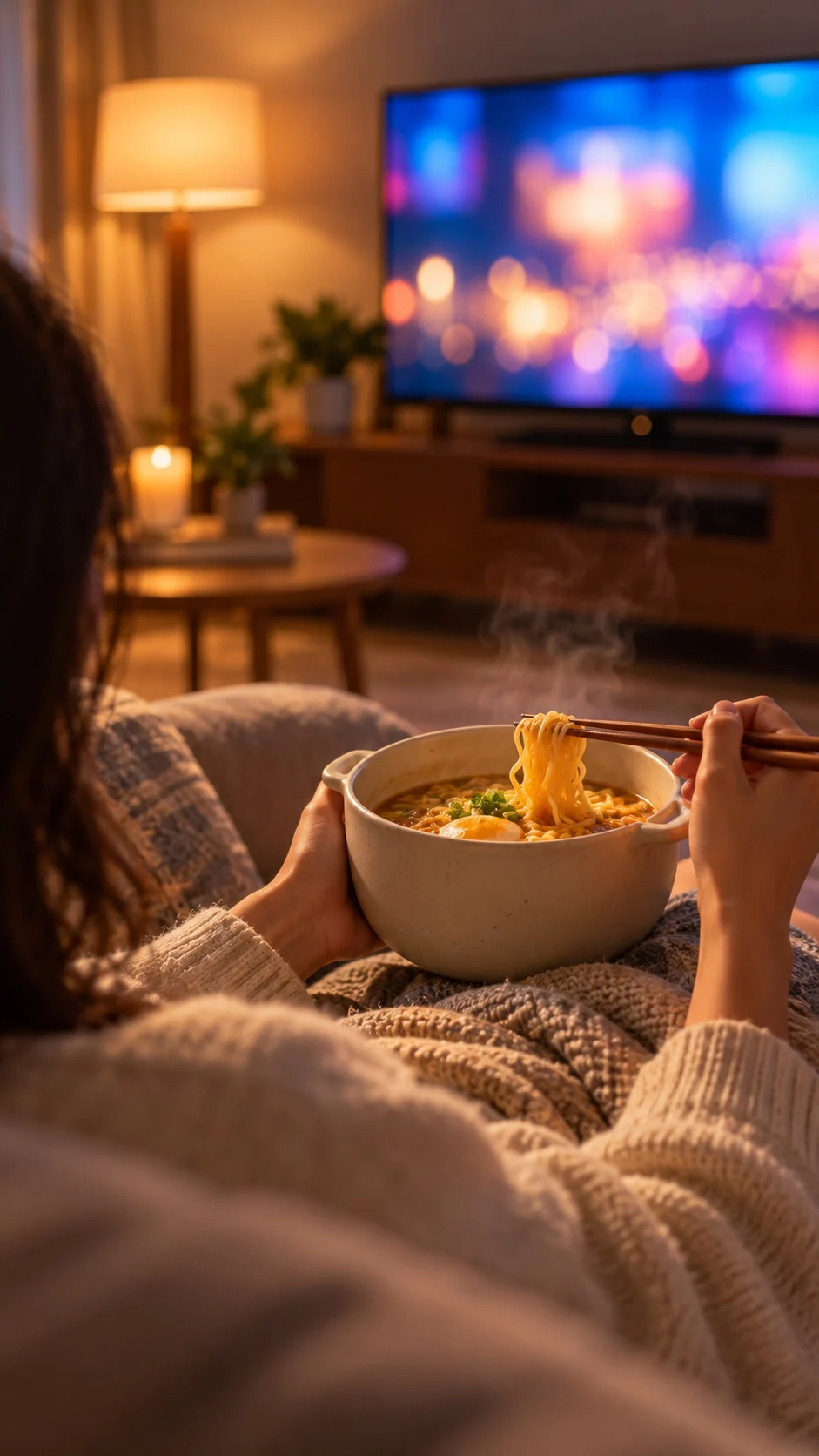
Open on appetite and mood: a warm evening at home with a craving implied.
- Visual
- Warm evening at home; a viewer seen from behind watching an intentionally blurred TV, the ramyeon craving implied by the food setting.
- On-screen text
A CRAVING FOR SOMETHING WARM?- Voiceover
- “Some Korean-drama nights come with a craving.”
Guardrail No sharp faces, recognisable programmes, characters, logos, TV footage or licensed music.
Version A (craving-led) vs. Version B (food-first). A may increase early hold; B may generate more qualified clicks because the food is immediately visible.
- Evaluate early retention and outbound CTR first, then purchases and economics if volume supports it.
- If a hook improves views but worsens qualified traffic, don't choose it on views alone.
- If purchase volume is insufficient, label the result inconclusive.
This compares hook packages; it does not test Korean-drama interest as a proven segment.